
Reviewed · KHARKHORIN & CENTRAL MONGOLIA TOURS
14 days Combination of Gobi and Central Mongolia
The best part of this 14 day Mongolia tour is its range. In two weeks, you move from bare Gobi rock and towering sand dunes to green river valleys, volcanic lakes, hot springs, and the old Mongol capital of Kharkhorin. You get far more than a quick desert stop.
I like the long stays in the Gobi and Orkhon Valley, where you have time for camel riding, hiking, horse riding, fishing, and a close look at local life. I also like the practical value: camping gear, nearly all meals, entrance fees, and a small group of no more than 12 are included.
The main drawback is the road time. Several days involve long drives, including a 12 hour start and another 12 hour run toward Kharkhorin. You need moderate fitness, patience with rough travel days, and a real willingness to sleep in tents.
Key points at a glance
- Two very different Mongolias: Begin among Gobi cliffs and dunes, then finish beside forests, rivers, hot springs, and volcanic lakes.
- A full camel day at Khongoryn Els: You can ride a two humped camel for 2 to 5 hours, with time to cross the dunes and stop for lunch.
- Camping close to local life: A night can begin with camels nearby and end with foxes investigating your tent.
- Real time in Orkhon Valley: You have a no driving day for horse riding, fishing, hiking, and learning about dairy-making and nomadic routines.
- A strong history finish: Kharkhorin, Erdene Zuu Monastery, and the Mongol Empire museum add cultural weight to the natural scenery.
- Good value for a long journey: At $2,025 per person, the package includes sleeping gear, 13 breakfasts, 13 lunches, 12 dinners, taxes, and admission fees.
Why this route works so well
Mongolia is a country where distances shape the trip. A place that looks close on a map can require hours of driving across open country. This route accepts that reality and links the country’s major highlights in a sensible arc from Ulaanbaatar through the Gobi and into Central Mongolia.
You begin with the dry, dramatic side of the country. The Gobi brings granite outcrops, pale cliffs, saxaul shrubs, and huge dunes. Later, the colors and textures change. The Orkhon Valley adds grass, water, horses, and traditional ger based life, while Khorgo Terkhiin Tsagaan Nuur National Park brings volcanic rock and a broad white lake.
I see the route’s strongest feature as its contrast. You are not spending 14 days looking at one type of scenery. You are also not rushing through a string of brief photo stops. Several places receive a full day, which gives you room to walk, ride, rest, and look around.
The group size helps here. With a maximum of 12 people, departures should feel more manageable than a large coach trip. The tour offers pickup and a mobile ticket, and the meeting point is near public transportation. Confirmation is provided when you book.
More of central Mongolia:
- From Ulaanbaatar: Central Mongolia Guided 3-Day Tour
★ 4.6 · 186 reviews - Ulaanbaatar: Small Group 3-Day Best of Central Mongolia Tour
★ 4.1 · 171 reviews - From Ulaanbaatar: Semi Gobi and Ancient Kharkhorin Tour
★ 4.5 · 114 reviews
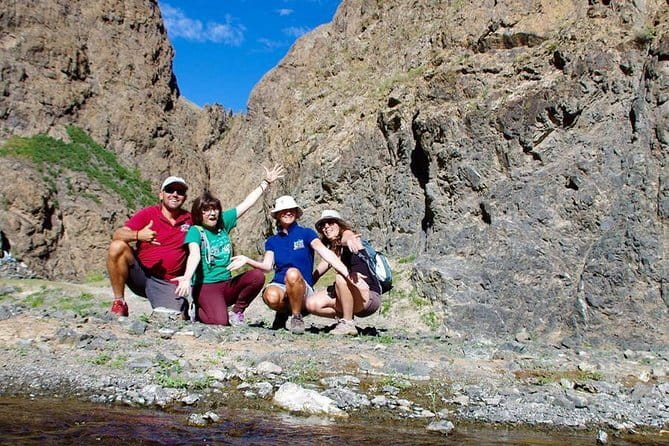
Day 1: Granite at Baga Gazariin Chuluu
Your first day starts early with a long drive to Baga Gazariin Chuluu in Dundgobi Province. Allow roughly 12 hours for this day, so think of it as an introduction to Mongolia’s huge distances as much as a sightseeing stop.
Baga Gazariin Chuluu is a granite mountain area rising from open plain. The highest point reaches about 1,768 meters, and the main granite formation extends roughly 15 kilometers by 10 kilometers. The sight is unusual because the rock appears suddenly from otherwise broad, open country.
Admission is included. You should expect the day to feel demanding, especially after an early departure. Still, it gives you an immediate sense of scale and a first taste of the Gobi’s spare, exposed beauty.
Day 2: The eroded cliffs of Tsagaan Suvarga
After breakfast, you drive to Tsagaan Suvarga, known as the White Stupa. Natural erosion shaped the impressive cliffs, which sit near the meeting point of the Middle Gobi and South Gobi regions.
The name comes from the pale, layered formations that can resemble old religious monuments from a distance. You have about three hours here, enough to walk around and see the formations from different angles without turning the stop into a strenuous hike.
This is one of the tour’s more visual stops. It is also a reminder that the Gobi is not just sand. Rock, clay, and eroded earth do much of the work here. Admission is included, and the morning breakfast helps make the early travel routine easier.
Day 3: Yoliin Am and Gobi Gurvansaikhan
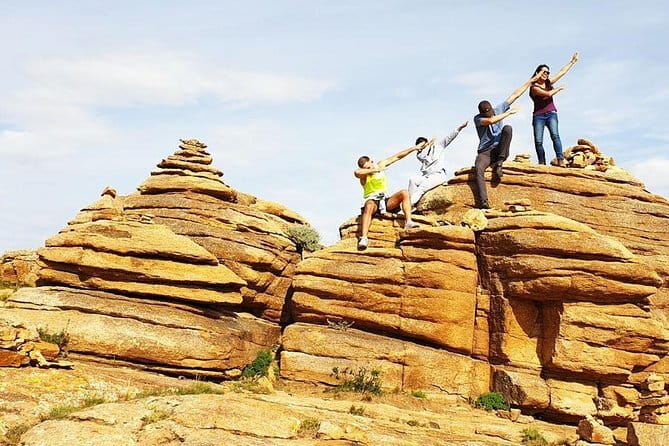
The route continues toward Gobi Gurvansaikhan National Park, passing through Dalanzadgad, the capital of Umnugobi Province. The park includes the easternmost section of the Altai mountain complex and brings a sharper change from the open desert plain.
The planned visit lasts about two hours. The area is known for Yoliin Am Valley, with unusual rock formations, bird life, and plants. The valley gives you a chance to walk in a more enclosed setting after the wide horizons of Baga Gazariin Chuluu and Tsagaan Suvarga.
The timing here is fairly brief, so you should not expect a long trek. Still, this stop matters because it shows how life survives in the Gobi. Plants and birds occupy a place that, at first glance, looks almost empty.
Further out of the capital, a different kind of trip:
- From Ulaanbaatar: Genghis Khan Statue NationalPark CamelRide
★ 4.8 · 353 reviews - Genghis Khan Statue Day Tour+National Park+Camel Ride+Eagle
★ 4.5 · 261 reviews - Terelj national park transport /Best price tour
★ 4.7 · 135 reviews - Ulaanbaatar: Chinggis Khaan Statue and Turtle Rock Day Tour
★ 4.7 · 132 reviews
Day 4 and Day 5: Khongoryn Els by foot and camel
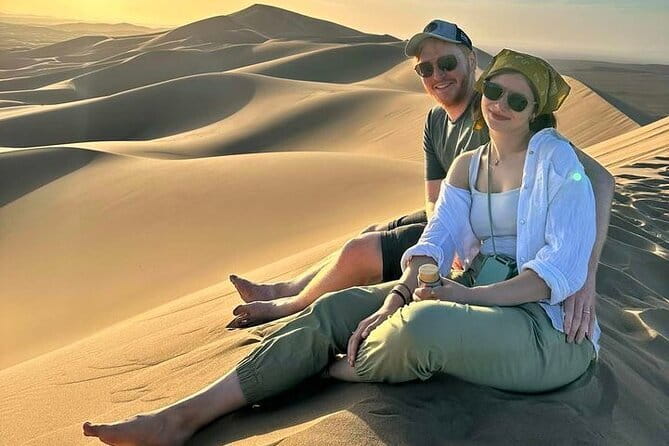
Khongoryn Els is the major desert highlight. The shifting dunes stretch about 180 kilometers, reach heights of around 400 meters, and can be as wide as 20 kilometers. Higher mountains surround them, while strips of green vegetation border parts of the sand.
On Day 4, you drive to the dunes and have about three hours to see the area. The scale is difficult to appreciate from a vehicle, so the next day is especially welcome. Day 5 has no driving, leaving room for a 2 to 5 hour camel ride.
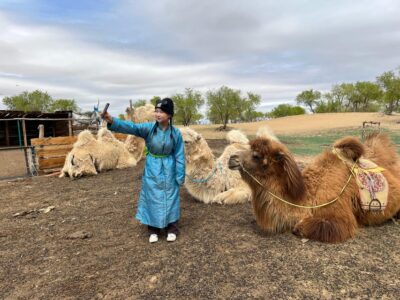
You ride a two humped Bactrian camel, the animal associated with Mongolia’s Gobi. If you choose the longer ride, you cross the dunes and stop for lunch along the way. This is active, slow travel, with the camel’s steady pace letting you take in the sand and surrounding mountains without rushing.
The tour summary also allows for 2 to 4 hours of camel trekking per day, while the day description gives a possible range of 2 to 5 hours. In practical terms, the ride length can vary with your preference and the day’s conditions. Ask about the exact plan when you arrive.
The sunset climb is another highlight. Reaching the top of the dunes gives you a wide view over the sand and desert. The climb is physically harder than it looks, so bring water and take your time. This is one of the moments that makes the long Gobi drives worthwhile.
Day 6: Dinosaur country at the Flaming Cliffs
At Bayanzag, you visit the area better known as the Flaming Cliffs. The red formations formed 60 to 70 million years ago, and the site is famous for the discovery of dinosaur fossils and the first known nest of dinosaur eggs by explorer Roy Chapman Andrews.
The name Bayanzag refers to the area’s saxaul shrubs, which are well suited to dry conditions. You have about three hours to explore the cliffs and surrounding ground. The mix of red rock and pale desert makes this a memorable stop, but its importance goes beyond color. You are walking through one of the world’s best known dinosaur discovery areas.
Admission is included. Wear shoes suitable for uneven ground, since the visit involves walking around the formations rather than simply viewing them from a bus.
Day 7: The ruins of Ongi Monastery
The drive then turns toward Ongi Monastery, or Ongiin Khiid. Founded in 1660, it was once one of Mongolia’s largest Buddhist monastery complexes, with temple groups on both the north and south sides of the Ongi River.
The visit lasts about three hours. The site gives you a different view of Mongolia, one shaped by religion and political change rather than geology. The surviving remains and setting along the river make this a thoughtful pause after the bright cliffs and dunes.
This is another day with substantial driving, so your energy may vary by the time you arrive. The value lies in the change of subject. After several days focused on nature, Ongi introduces the country’s spiritual past.
Day 8 and Day 9: Orkhon Waterfall and nomadic life
Orkhon Valley marks a major shift in the trip. The area is greener and shaped by the Orkhon River, Mongolia’s longest river. You visit the Orkhon Waterfall, also called Red Waterfall, which formed through volcanic activity.
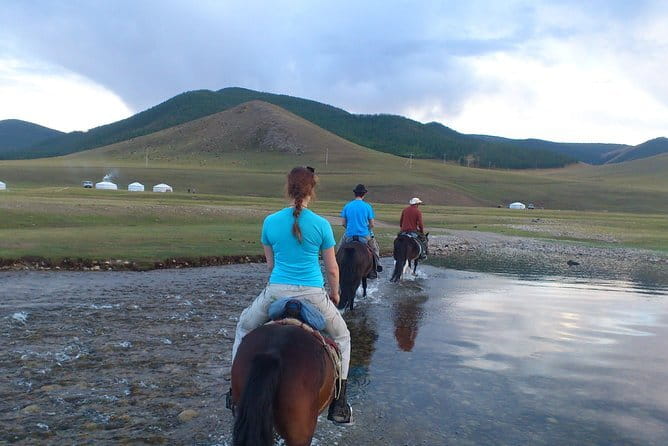
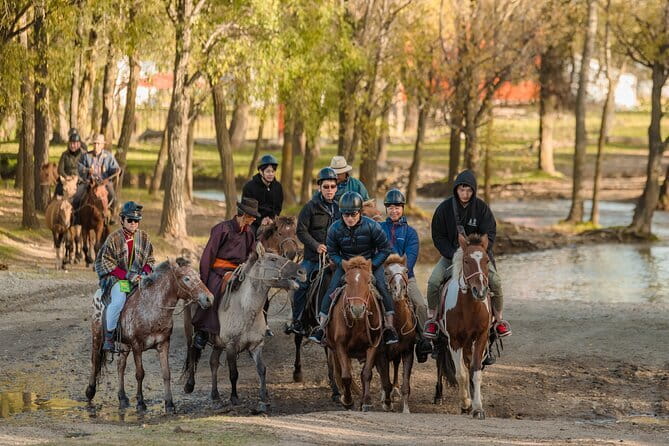
Day 8 includes the drive and a roughly three hour visit. Day 9 has no driving, and that free day is one of the route’s best design choices. You can hike, ride a horse, fish, and learn about daily nomadic life, including dairy-making.
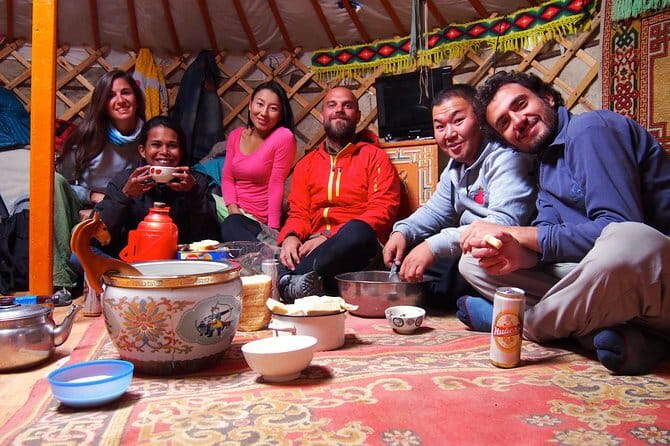
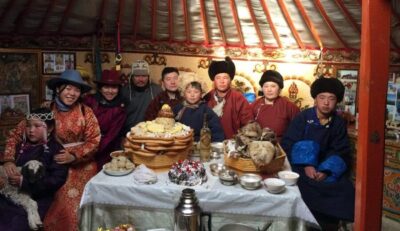
This is where the tour feels most personal. You are not only passing through a scenic valley. You have time to see how people work with animals, food, weather, and distance. The included camping equipment helps make this possible, with a sleeping bag, tent, and mattress supplied.
Camping may not suit everyone. One night can place you near camels, another near a large herd of sheep, and foxes may even sniff around the outside of your tent. If you normally avoid camping, this is the kind of setting that can change your mind, but you should still pack for basic outdoor conditions and accept that comfort is limited.
Day 10: Soaking at Tsenkher Hot Spring
After breakfast, you drive to Tsenkher Hot Spring. The spring is described as one of Mongolia’s largest, with water reaching 86 degrees Celsius, a strong flow, high alkalinity, and relatively high fluoride levels.
Hot and mineral springs have long had a place in Mongolian traditional medicine. Here, the appeal is simple: after days of driving, hiking, riding, and camping, you have a chance to rest in warm mineral water.
The day is listed at about 12 hours, which likely includes the long transfer and time at the spring. Do not confuse this with 12 hours of soaking. It is another big movement day with a restorative stop built in.
Day 11 and Day 12: Volcanic country at the Great White Lake
The route continues to Khorgo Terkhiin Tsagaan Nuur National Park. On the way, you pass Chuluut Gorge, then reach a region of extinct volcanic craters, pine covered lava fields, grazing yaks, and Terkhiin Tsagaan Lake, known in English as the Great White Lake.
Day 11 includes about six hours at the lake and surrounding area. Day 12 gives you about four hours for a hike toward Khorgo. The volcano erupted roughly 8,000 years ago, leaving behind the craters and lava formations that shape the park today.
This pair of days works well because you get both transport and time on foot. The lake adds open water to a route already filled with rock, sand, and river valleys. The volcanic setting also makes a useful contrast with the Gobi, where erosion is the main force you have been seeing.
Day 13: Kharkhorin and Erdene Zuu
The next long drive takes you to Kharkhorin, the site of the 13th century capital of the Mongol Empire. The day is listed at about 12 hours, so plan for a travel-heavy schedule.
The key visit is Erdene Zuu Monastery, one of Mongolia’s most important historic religious sites. You also visit a local museum with material connected to the Mongol Empire. This stop gives the entire journey a historical center, linking the country’s present nomadic traditions with the era when Mongol power reached far beyond Mongolia.
Admission to the Kharkhorin stop is listed as free, although the package includes all fees and taxes overall. The important practical point is that you should expect the cultural visit after a long road day, not as a relaxed half-day in town.
Day 14: Takhi horses at Hustai National Park
The final day takes you to Hustai National Park, established in 2003. Its main purpose here is the reintroduction of the takhi, Mongolia’s wild horse. The reintroduction project began in 1992, and you visit the park information center.
This is a fitting last nature stop. The takhi is a distinct symbol of Mongolia’s wild spaces, and seeing the animal in a protected setting adds a conservation story to the trip. The park visit lasts about seven hours.
Afterward, you return to Ulaanbaatar, with lunch along the way. The tour can stop at a Gobi Factory cashmere shop before hotel check-in. That shopping stop may appeal if you want a practical souvenir, though you should see it as an optional final errand rather than a major cultural sight.
What the $2,025 price really covers
At $2,025 per person, this is not a cheap weekend excursion. It is a 14 day journey across a large country, and the price includes a substantial amount:
- Sleeping bag, tent, and mattress
- All listed fees and taxes
- 13 breakfasts
- 13 lunches
- 12 dinners
- Entrance fees for many listed attractions
- Pickup option
- A group capped at 12 people
That makes the price easier to assess. You are paying not only for sightseeing, but also for transport across long distances, camping equipment, meals, and access to remote places that would be hard to connect independently.
The gaps matter too. Travel insurance is not included. The information provided does not specify hotel standards, vehicle type, or the exact camping setup at every stop, so ask about those points before booking if they affect your comfort.
I consider the package good value for someone who wants Mongolia in one sustained trip. The value is weaker if you dislike long drives, basic camping, or a schedule that moves between remote areas with limited downtime.
Who should book this Mongolia journey?
You should consider it if you want:
- A broad first trip covering both the Gobi and Central Mongolia
- Camel riding and desert scenery, not just a short Gobi excursion
- Time with nomadic families and traditional dairy-making
- Hiking, horse riding, fishing, and hot springs
- Archaeology, Buddhist history, and Mongol Empire sites
- A small group rather than a large organized departure
You should think twice if you need polished hotels every night, short transfer days, or a gentle physical schedule. The tour requires moderate fitness, and the combination of tent camping, camel riding, hiking, and long drives can wear you down.
Weather also matters. The experience requires good weather. If poor weather forces cancellation, you are offered another date or a full refund. You can cancel for a full refund up to 24 hours before the start time, but cancellations or changes inside that window are not refunded or accepted.
Should you book it?
Book this tour if your main goal is to see Mongolia’s major natural and cultural highlights without arranging a complicated cross-country route yourself. The strongest reasons are the full camel day at Khongoryn Els, the no driving day in Orkhon Valley, and the chance to camp close to animals and local life.
Skip it if you want a soft-edged vacation. Mongolia rewards flexibility, but it asks for effort. At $2,025, the trip offers solid coverage and a lot of included meals and gear, provided you are comfortable with long roads, tents, and changing conditions.
FAQ
How long is the Mongolia tour?
The tour lasts approximately 14 days, beginning in the Gobi region and ending with a return to Ulaanbaatar.
What is the maximum group size?
The group has a maximum of 12 travelers.
Is pickup offered?
Yes, pickup is offered. The meeting point is also near public transportation.
Is camping equipment included?
Yes. The package includes a sleeping bag, tent, and mattress.
How much camel riding is included?
The Khongoryn Els schedule includes 2 to 5 hours of camel riding on Day 5. The overall tour description refers to spending about 2 to 4 hours a day camel trekking.
Are meals included?
Yes. The package includes 13 breakfasts, 13 lunches, and 12 dinners.
Is travel insurance included?
No. Travel insurance is not included in the tour price.
What happens if bad weather cancels the tour?
If poor weather causes cancellation, you are offered a different date or a full refund. You can also cancel for a full refund up to 24 hours before the experience starts.
Just added around Ulaanbaatar
- 8 Day Great Gobi and Central Mongolia★ 5.0 · 3 reviews
- Terelj National Park & Chinggis Khan Statue Day Tour★ 5.0 · 3 reviews
- 2 Days Tour: Terelj National Park And Chinggis Statue★ 5.0 · 3 reviews
- Horseback Riding Tour to Turtle Rock & Aryabal★ 5.0 · 3 reviews
- Terelj and World energy center Gobi overnight train tour★ 5.0 · 3 reviews
- A Day Aglag Buteel Temple★ 4.5 · 3 reviews
- Nomad Family Home Stay in Arkhangai Province★ 5.0 · 3 reviews
- Essence of Mongolia 5 Days★ 5.0 · 3 reviews
Kharkhorin & Central Mongolia Tours, compared.
Small Group 3-Day Best of Central Mongolia Tour
Read our review →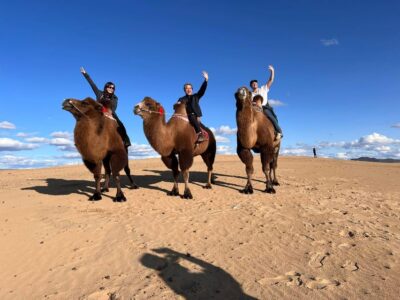
4 Day Best of Central Mongolia tour, Chinggis Khan statue
Read our review →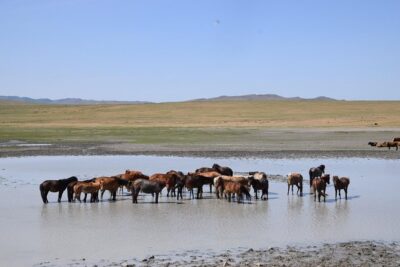
Semi-Gobi and Kharkhorum overnight private trip
Read our review →
5 Days Terelj national Park Tour From Central Mongolia
Read our review →Browse the lists this tour appears in