
Reviewed · GOBI DESERT TRIPS
7 days Great Gobi Tour
The great appeal here is variety. In seven days, you move from bare granite peaks to a frozen gorge, then on to towering dunes, monastery ruins, and the daily world of Mongolian nomads. The Gobi is not one flat sea of sand, and this route makes that clear.
I like the chance to meet nomad families over breakfast, and I like the small-group setup: this is a private trip for your party rather than a mixed coach tour. Staff connected with the tour include driver Tomuro and guides Singu Ratler, Saruul, and Nomin, with Singu also serving as a photographer. The route is carefully paced, though the long road days and basic desert conditions will not suit everyone.
Key points at a glance
- A private seven-day journey: Only your group takes part, with pickup offered from Danista Nomads in Ulaanbaatar.
- Six striking stops beyond the capital: See granite formations, ancient sea-floor cliffs, an ice gorge, huge dunes, monastery ruins, and rock art.
- Nomad contact built into the route: Breakfast with a nomad family gives the trip a human side, not just a succession of viewpoints.
- Long drives are part of the deal: Day seven alone takes about six hours, and several earlier days involve broad stretches of road.
- Good value for a full private trip: At $1,400 per person, the price makes more sense when shared transport, guiding, lodging, meals, and a remote route are considered together.
- Easy cancellation terms: Cancel at least 24 hours before the 8:30 a.m. start for a full refund.
Why seven days works for the Gobi
A quick trip to the Gobi can leave you with a few impressive photographs but little feel for the region. This seven-day route gives you time to see how much the southern Mongolian countryside changes from one area to the next.
You begin and end in Ulaanbaatar, but most of the trip is spent far from city streets. The route links the Middle Gobi and South Gobi areas in a large loop, with each day built around one main sight. That helps keep the schedule clear. You know what the day is about, yet there is still room for the road, the scenery, and the people who live here to shape the experience.
The private format matters. Your group can share the same vehicle, guide, and pace instead of being folded into a large bus tour. I would still expect plenty of time in the vehicle. Mongolia covers huge distances, and there is no way to connect these places without long drives.
The price is $1,400 per person. That is not a budget day trip, but it is a fairer comparison to a private expedition than to a standard sightseeing excursion. You are paying for seven days on a remote route, not simply admission to six attractions. Group discounts may also affect the final cost, so this can make more sense for two or more people traveling together.
More Gobi Desert trips:
- Ulaanbaatar: Semi-Gobi Desert Day Trip & Camel Ride
★ 4.0 · 92 reviews - 7 days Central Mongolia and Great Gobi
★ 4.5 · 7 reviews - Discover / 8 day Great Gobi and Central Mongolia
★ 4.8 · 5 reviews
Day 1: Granite country at Ikh Gazriin Chuluu
The first major stop is Ikh Gazriin Chuluu Nature Reserve, a granite mountain area in the Gobi with a high point of 1,706 meters. The rock formations give you an immediate reminder that the Gobi is about far more than sand.
The stone here has a rough, weathered character. You can walk around the formations and take in broad views of the surrounding country, with the rock itself providing the main drama. Admission is free, which keeps the day focused on the setting rather than on ticketed attractions.
This is a good opening stop because it eases you into the scale of Mongolia. You are not rushed through an indoor museum or a crowded monument. Instead, you begin with open ground and unusual geology. Bring patience for the road and comfortable shoes, since the experience is based on seeing the area on foot rather than simply looking from a vehicle.
Day 2: Tsagaan Suvarga and its ancient cliff walls
Tsagaan Suvarga means White Stupa, a name given to the striking eroded cliffs by local people. The formations are said to show geological layers formed over about 10 million years, creating bands and shapes that change with the light.
This is one of the route’s best stops for photographs, but it is more than a scenic overlook. The cliffs help you read the Gobi as a place shaped by water, wind, and time. The exposed layers give the site a sense of age without needing a formal visitor center or elaborate presentation.
Admission is free. That sounds like a small detail, but it is useful when judging the tour price: much of what you are paying for is the transport, guiding, meals, and accommodation needed to reach remote places such as this.
Do not expect a short hop between sights. The distances in Mongolia are substantial, and the road itself becomes part of the day. I would use the transfer time to watch the changing ground outside the window and to ask your guide about the places you pass.
Day 3: A breakfast with nomads, then Yolin Am
Day three adds the human side of the trip. After breakfast with a nomad family, you continue to Yolin Am, or Lammergeier Valley, a narrow gorge in the Gurvan Saikhan Mountains of southern Mongolia.
The breakfast is one of the most valuable moments in the whole route. It gives you a direct connection with a family living in the region instead of treating the Gobi as empty scenery. The supplied details do not promise a long cultural program, so I would think of this as a genuine meeting and meal, not a staged village performance.
Yolin Am is known for its narrow mountain walls and an ice field that can remain in the gorge. The contrast is the surprise: after dry open country, you reach a place where shade and mountain conditions create ice. The exact amount of ice can vary with weather and season, so keep expectations sensible. The name is often translated as Vulture Valley, and the gorge forms part of the Gurvan Saikhan mountain area.
Admission is free. The walk and terrain may require a reasonable level of mobility, even though the tour information says most people can participate. If you dislike uneven ground or long days outside, ask for current conditions before booking.
A few more Ulaanbaatar trips to weigh up
- Gobi tour Mongolia 7 Days
★ 5.0 · 8 reviews
Day 4: The singing dunes of Khongoriin Els
Khongoriin Els is the classic sand dune day. These are described as Mongolia’s largest dunes, reaching about 200 meters high and extending roughly 12 kilometers wide. Their nickname, the singing dunes, comes from the sound sometimes produced when sand shifts down the slopes.
The scale is the point. You are not looking at a small patch of sand beside a road. The dunes rise in long waves, and the sight changes as you move around them. Climbing even partway can be demanding, so you should treat the dunes as a physical stop rather than a viewpoint that requires no effort.
The route allows a full day for Khongoriin Els, which is sensible. A rushed hour would not give you much time to appreciate the size of the area. You may find the wind strong and the sand tiring, particularly if you try to climb high. Good footwear, water, sun protection, and a willingness to move at your own pace will help.
This is also the point where the tour’s balance becomes clear. The Gobi offers beautiful, memorable places, but it does so with heat, dust, wind, and distance. The route does not pretend otherwise.
Day 5: Bayanzag and Ongi Monastery
The fifth day takes you toward Saikhan Ovoo, a small village in the Middle Gobi province, after lunch in the Bayanzag area. The supplied schedule gives the day to Ongi Monastery, also called Ongi Khiid, where the remains of an older monastic complex sit alongside a small active monastery.
Ongi is not simply a ruin. The site connects the traces of the past with religious life in the present. That combination gives the stop more depth than a monument that exists only as a shell. Admission is included here, unlike at several of the natural sites.
The wording of the schedule places lunch in Bayanzag before the drive onward. Since meal arrangements can affect a long road day, it is worth confirming the exact timing and food choices when you book. One food caution is clear: the available meals may work better for people who eat meat than for vegetarians or vegans. If you avoid animal products, tell the operator before departure and ask what alternatives can be arranged.
Ongi is a useful change of pace after the dunes. Instead of spending the entire day with geology, you get a place shaped by faith, local history, and continuing practice.
Day 6: Rock formations and old traces at Baga Gazariin Chuluu
Baga Gazariin Chuluu brings you back to granite country, but with more individual sights to seek out. The area includes Bolort Cave, an eye-treatment spa, rock images, petroglyphs, burial mounds, and the remains of Choir Monastery.
The name refers to a cluster of granite formations, and the stop works well for anyone who likes places where natural features and human traces sit close together. The petroglyphs and burial mounds offer a glimpse into earlier use of the region, while the monastery ruin adds another layer of religious history.
Admission is included. That is helpful on the final full sightseeing day because you can focus on the sites without adding several small entrance charges. The day may also feel more varied than the first granite stop at Ikh Gazriin Chuluu, since there are caves, rock art, and historic remains to look for.
Some descriptions of the area use the phrase eye-treatment spa, but the information provided does not explain the facilities, treatment, or operating conditions. I would regard it as an optional point of interest rather than a guaranteed wellness experience. Ask your guide what is open during your visit.
Day 7: The six-hour return to Ulaanbaatar
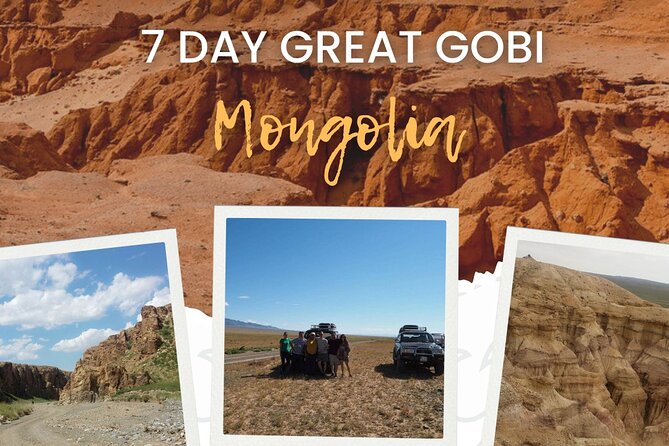
The last day is a return to Ulaanbaatar, taking about six hours. There is no major sightseeing stop listed for this day, so think of it as a transfer day rather than another full excursion.
That long drive can feel tiring after nearly a week on the road. On the other hand, it gives you time to look back over the route and watch the country change as you approach the capital. The activity ends back at the meeting point, Danista Nomads, at Orkhon Street 1-37 in Bayanzürkh District, with the start point listed as the same location.
The tour begins at 8:30 a.m. Pickup is offered, but you should confirm the pickup arrangement and time with the operator rather than assume it means hotel pickup in every case. The stated meeting point is Danista Nomads, Orkhon Street 1-37, BGD 16 khoroo, Ulaanbaatar 16040.
Guides, drivers, and the feel of the road
The people in the vehicle can make or break a remote trip. Names associated with this tour include Tomuro, an experienced driver, and guides Singu Ratler, Saruul, and Nomin. Singu is also identified as a guide and photographer, while Nomin is described as attentive to personal requests.
Tomuro is specifically connected with safe, experienced driving. That matters in Mongolia, where a large part of the trip takes place between major attractions rather than on a neat chain of city roads. Saruul is also identified as an experienced guide, and the tour operation is described as responsive and helpful.
I would still ask a few practical questions before paying: who will guide your departure, what vehicle will be used, what meals are covered, and what kind of accommodation is planned each night. The supplied information says accommodation and food are good overall, but it does not provide a full lodging list or room details.
The tour is private, but private does not mean luxurious. Expect an adventurous trip with remote stops, long drives, and accommodation suited to a Gobi route. If you need polished hotels, short transfers, or a fixed menu with many vegetarian choices, this may require too much compromise.
Food, accommodation, and comfort
The strongest practical warning concerns food. Meals are described as good for people who eat meat, while vegetarians and vegans may have fewer suitable choices. Contact Danista Nomads Tour before departure if your diet is restricted. Do not wait until the first desert dinner.
Accommodation is described positively, but the provided details do not name each property or spell out room types. That means you should book this for the route and the experience, not on the assumption of resort-level comfort. Ask what nights are spent in ger camps or other lodging, and what facilities are available.
A private trip can make these matters easier because your guide may be able to discuss needs with the accommodation providers. It also gives you a direct person to speak with when weather, road conditions, or meal plans change.
Who should pay $1,400 for this trip?
I see the price as reasonable for someone who wants a ready-made private journey through several remote Gobi regions. The route covers seven days, includes a driver and guide, and connects places that would be difficult to arrange independently. It also gives you cultural contact with nomad families rather than keeping you inside a sightseeing bubble.
The value is weaker if you only want the sand dunes. A shorter tour could suit you better, though no alternative price is provided here. You are paying for the full sweep: Ikh Gazriin Chuluu, Tsagaan Suvarga, Yolin Am, Khongoriin Els, Ongi Monastery, Baga Gazariin Chuluu, and the connecting road days.
The trip is best for you if you enjoy open spaces, unusual geology, simple accommodation, and a little uncertainty. It is also a good fit for couples, families, or friends who want their own vehicle and guide. Group discounts may improve the per-person value for a larger private party.
The tour is less suitable if you need guaranteed vegetarian meals, dislike long drives, or want a tightly programmed schedule with little time in the vehicle. Most people can participate, but the natural sites may include uneven ground and walking, particularly around Yolin Am and the dunes.
Booking details worth checking before you go
Confirmation is provided when you book. The activity has mobile tickets, and only your group participates. The posted cancellation rule is generous if your plans are firm: cancel at least 24 hours before the local 8:30 a.m. start for a full refund.
Changes or cancellations made within 24 hours are not accepted for a refund. The experience also depends on good weather. If poor weather forces cancellation, you are offered another date or a full refund.
I would confirm the current departure date, pickup details, dietary needs, accommodation plan, and guide assignment before setting out. Those questions are more useful than simply asking how scenic the Gobi will be. The scenery is not in doubt. Your comfort depends on knowing how the practical pieces fit together.
Should you book the Great Gobi Tour?
Book it if you want one private trip that shows the Gobi in several forms: granite, cliffs, ice, dunes, monastery remains, rock art, and nomad life. The route is well chosen, and the pace gives each major stop a full day rather than reducing everything to a quick photograph.
I would book with realistic expectations. This is a remote road trip, not a luxury escape. The long transfers, basic conditions, and limited food choices for vegetarians are real considerations. If those fit your idea of adventure, $1,400 buys a substantial seven-day experience with a local team and a strong mix of nature and culture.
FAQ
Where does the tour start?
The tour starts at Danista Nomads, Orkhon Street 1-37, BGD 16 khoroo, Ulaanbaatar 16040, Mongolia.
What time does the tour begin?
The listed start time is 8:30 a.m.
Where does the tour end?
The activity ends back at the meeting point in Ulaanbaatar.
Is pickup available?
Yes, pickup is offered. Confirm the exact pickup arrangement with Danista Nomads Tour before departure.
Is this a private tour?
Yes. Only your group participates in the activity.
What is the cancellation policy?
You can cancel at least 24 hours before the local start time for a full refund. Cancellations or changes made less than 24 hours before the start are not refunded.
What happens if bad weather cancels the tour?
If poor weather causes cancellation, you can choose another date or receive a full refund.
Just added around Ulaanbaatar
- 8 Day Great Gobi and Central Mongolia★ 5.0 · 3 reviews
- Terelj National Park & Chinggis Khan Statue Day Tour★ 5.0 · 3 reviews
- 2 Days Tour: Terelj National Park And Chinggis Statue★ 5.0 · 3 reviews
- Horseback Riding Tour to Turtle Rock & Aryabal★ 5.0 · 3 reviews
- Terelj and World energy center Gobi overnight train tour★ 5.0 · 3 reviews
- A Day Aglag Buteel Temple★ 4.5 · 3 reviews
- Nomad Family Home Stay in Arkhangai Province★ 5.0 · 3 reviews
- Essence of Mongolia 5 Days★ 5.0 · 3 reviews
Gobi Desert Trips, compared.
Discover / 8 day Great Gobi and Central Mongolia
Read our review →
Visit Great Gobi attractions in 3 day /Full adventure
Read our review →
2D,1N Gobi desert and Old city Kharkhorum stay with Nomadic family
Read our review →

6 Days Gobi Desert Tour with complimentary airport pickup
Read our review →
Browse the lists this tour appears in