
Reviewed · GOBI DESERT TRIPS
Gobi desert Mongolia for 8 days
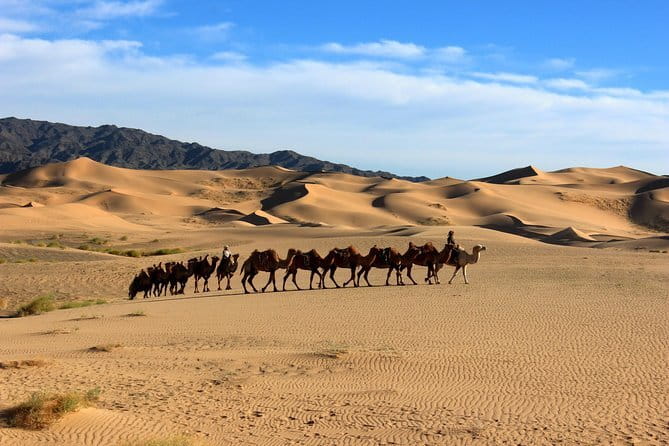
The big draw here is the variety of the Gobi. In eight days, you move from granite mountains and chalk cliffs to an ice-filled gorge, singing dunes, and the red Flaming Cliffs. This is not a quick desert photo stop. It is a long overland trip across southern Mongolia.
I like the small maximum group of 12, plus the practical package of a 4WD, fuel, guide, cook, meals, ger accommodation, park fees, horse riding, and water. I also like that the company is Mongolian owned, giving the trip a direct link to local life and nomadic culture. The main drawback is the driving: Day 1 takes about 10 hours, and several other days involve long stretches over rough roads.
Key points to know before booking
- Eight days across five very different Gobi sights: You visit Baga Gazariin Chuluu, Tsagaan Suvarga, Yoliin Am, Khongoryn Els, and Bayan-Zag.
- Long 4WD road days: The route includes a full 10-hour drive on the first day, plus drives of about 195 kilometers and 150 kilometers later in the trip.
- Ger accommodation and local food: Nights are spent in traditional ger camps or gers, with breakfast, lunch, and dinner provided.
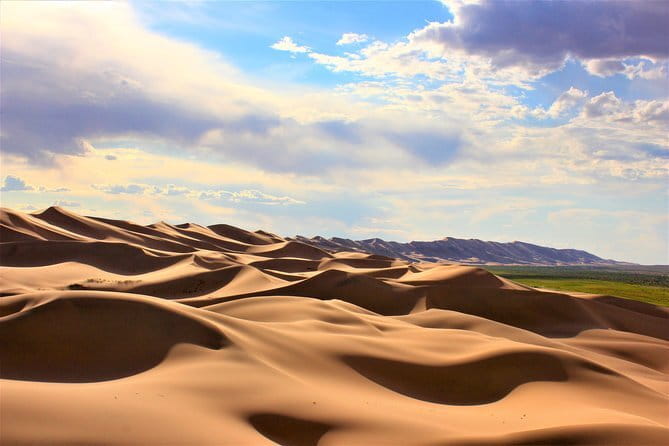
- Khongoryn Els gets two days: You have time to climb the large dunes and see the oasis near Khongor Creek, not just stop for a photograph.
- A small group keeps things manageable: The maximum is 12 people, with an English-speaking guide and cook.
- Strong fitness is required: Hiking the dunes and coping with repeated long drives will suit active visitors best.
Why this Gobi route works
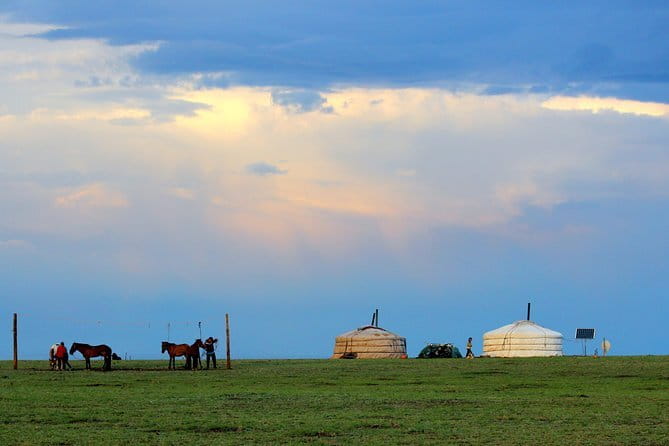
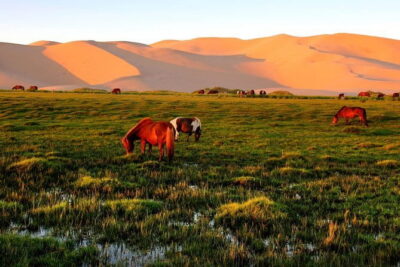
Mongolia’s Gobi is not one endless field of sand. It shifts constantly between bare rock, open steppe, cliffs, mountains, dry riverbeds, and dunes. This route makes good use of that range.
You begin close to Ulaanbaatar, then travel south through Dundgobi Province and into the Gobi region. The route is built around famous sights, but it also gives you time in remote areas where the journey itself is part of the experience.
The company, Package Tour Mongolia, is Mongolian owned. That matters here because the trip is not only about scenery. The schedule includes ger stays, horse riding, local meals, and contact with nomadic traditions. One past trip with the company was arranged by Jigden, who also helped with overland planning from China. If you are booking, it is worth asking who will guide your departure and cook for your group.
The displayed rating is 5 from three reviews, with particular praise for the company’s planning, helpful staff, and cultural contact. That is a small sample, so I would treat it as encouraging rather than final proof. The practical details are stronger evidence: a clearly defined route, included meals, a 4WD vehicle, fuel, and an English-speaking guide and cook.
More Gobi Desert trips:
- Ulaanbaatar: Semi-Gobi Desert Day Trip & Camel Ride
★ 4.0 · 92 reviews - 7 days Central Mongolia and Great Gobi
★ 4.5 · 7 reviews - Discover / 8 day Great Gobi and Central Mongolia
★ 4.8 · 5 reviews
Day 1: Baga Gazariin Chuluu after a 10-hour drive
The first day is a serious road day. You leave Ulaanbaatar at 8:00 a.m. and spend about 10 hours driving toward Baga Gazariin Chuluu in Dundgobi Province.
Baga Gazariin Chuluu is a granite mountain area rising to about 1,768 meters. Its broken rock formations offer a sharp change from the city and an early taste of Mongolia’s open country.
The free admission is useful, but the real cost is time in the vehicle. You should arrive ready for a full day of driving, with a small personal bag, snacks if you want something beyond the provided meals, and clothing you can adjust as the temperature changes.
This first day also sets the rhythm for the trip. You are not simply being carried from one attraction to the next. You are crossing large distances in a 4WD, with the road and the empty country forming much of the day.
Day 2: Tsagaan Suvarga’s sheer chalk face
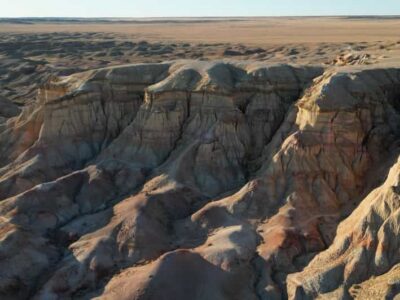
The next major stop is Tsagaan Suvarga, a dramatic scarp in Ulziit soum of Dundgobi Province. The eastern-facing cliff is described as about 30 meters high and 100 meters wide, shaped over thousands of years by natural forces.
Tsagaan Suvarga is a good reminder that the Gobi is not defined by dunes alone. Its appeal comes from exposed rock and steep, dry formations. The broad face gives you a strong viewpoint for photographs, but you should also take time to look at the smaller textures and color changes in the stone.
The schedule does not give a precise driving time or walking distance for this day. That means your guide’s timing and the road conditions will shape the experience. Keep expectations flexible. In Mongolia, a route that looks short on a map can take much longer on unpaved roads.
Day 3: Yoliin Am in the Gobi National Park
Yoliin Am sits in the Gobi Desert National Park, a strictly protected area covering about 70 square kilometers. The gorge lies among the highest mountains in the Gobi, making it one of the route’s strongest contrasts with the dry open country.
The rocky gorge is especially appealing if you want some walking during the trip. You will need a reasonable level of fitness, since the tour specifically asks for strong physical fitness. The information provided does not promise a set hike length, so ask your guide how far the group will walk on your date.
Yoliin Am can also bring a different feel from the other stops. At Khongoryn Els, the scale comes from open sand. Here, the mountains narrow your view and create a more enclosed setting. That change gives the eight-day route a welcome sense of movement and variety.
Further out of the capital, a different kind of trip:
- From Ulaanbaatar: Genghis Khan Statue NationalPark CamelRide
★ 4.8 · 353 reviews - Genghis Khan Statue Day Tour+National Park+Camel Ride+Eagle
★ 4.5 · 261 reviews - From Ulaanbaatar: Central Mongolia Guided 3-Day Tour
★ 4.6 · 186 reviews - Ulaanbaatar: Small Group 3-Day Best of Central Mongolia Tour
★ 4.1 · 171 reviews
Days 4 and 5: Two full looks at Khongoryn Els
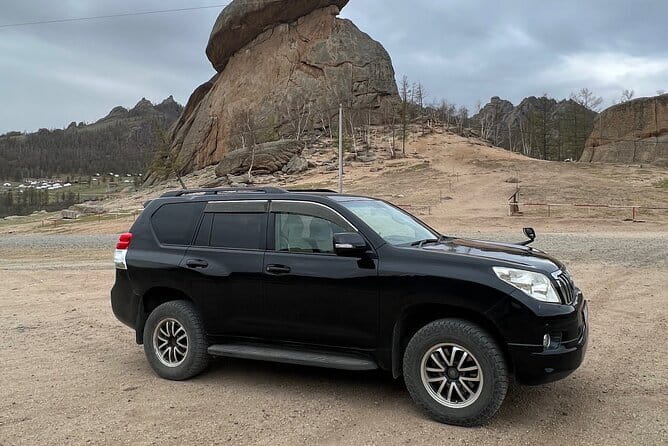
After lunch on Day 4, you drive about 195 kilometers to Khongoryn Els. These are among Mongolia’s largest and most striking sand dunes, and the route wisely gives them two days.
The first visit is about arrival and orientation. You see the broad sweep of sand, the surrounding open country, and the cold-water spring near the dunes. There is also an oasis near Khongor Creek on the northern edge of the sand. These water sources help explain why the area feels more than just a wall of dry sand.
Day 5 is the active part. You climb and hike to the top of the largest dunes. That sounds simple until you account for soft sand, steep slopes, and the effort required to gain height. Wear sturdy footwear and expect the climb to take work. The tour’s fitness warning is most relevant here.
Khongoryn Els is also called the Singing Dunes because the sand can make a sound like a plane engine on a windy day. You cannot schedule that sound on demand, but the name gives you a useful clue about the character of the place. Wind, sand, and silence do much of the work.
I like the two-day plan because it avoids turning the dunes into a rushed roadside stop. You have a better chance to see them in different light, walk at a sensible pace, and enjoy the setting rather than hurry back to the vehicle.
Day 6: The red rock of Bayan-Zag
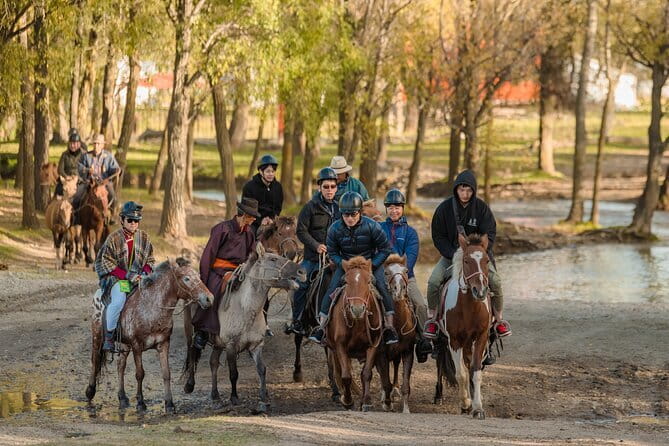
On Day 6, the route continues about 150 kilometers to Bayan-Zag, better known as the Flaming Cliffs. The name Bayan-Zag means rich in saxaul shrubs, while Flaming Cliffs refers to the red color of the rock.
This is one of the best-known places on the route because of the discovery of dinosaur fossils. The supplied information does not promise a fossil excavation or a museum visit, so you should think of this as a scenic and historical stop, not a guaranteed fossil-hunting activity.
You spend the night in a ger at Bayan-Zag. That overnight stay is valuable because the site is not reduced to a short daytime picture stop. The ger accommodation also gives the trip a more local feel than a standard hotel circuit, though comfort levels can differ from one camp to another.
Day 7: A quieter night near Erdenedalai
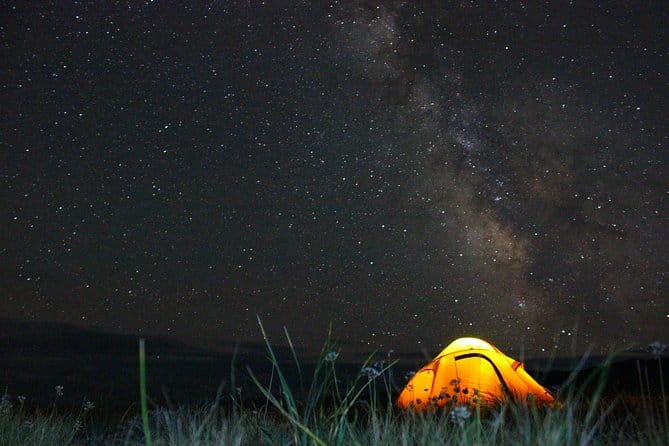
Day 7 takes you toward Erdenedalai village, where you spend another night in a ger. Compared with the headline attractions, this may sound like a quieter day, but that is part of its usefulness.
The schedule does not list a major sight or exact mileage for this section. You should expect the day to be shaped by the drive back north and by road conditions. It gives you time to slow down after the dunes and cliffs before the final return to Ulaanbaatar.
This is also a good point to appreciate the trip’s basic travel style. You are moving through rural Mongolia rather than returning to the capital each evening. The ger nights and village stop make the route feel like a journey across the country, not a string of isolated attractions.
Day 8: Returning to Ulaanbaatar
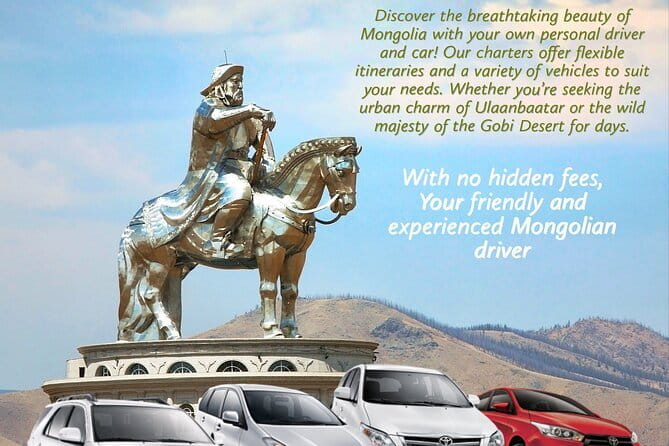
The final day is the drive back to Ulaanbaatar. The tour ends at the same city meeting point, the Ulaanbaatar City Government area in Chingeltei District.
No return time is provided, so do not schedule a flight, train, or important appointment too close to the expected arrival. The final drive may be tiring after a week on the road, and your exact arrival will depend on conditions.
The tour starts at 8:00 a.m. on the first day. Since accommodation in Ulaanbaatar is not included, arrange your city hotel separately for both before and after the trip.
What the $3,100 price really covers
At $3,100 per person, this is an expensive trip in simple cash terms. The value depends heavily on what you want from Mongolia.
The price includes a driver, 4WD vehicle, fuel, an English-speaking guide and cook, horse riding, national park entrance fees, ger accommodation as described, all listed meals, and 1.5 liters of drinking water per person each day. That is a substantial bundle for an eight-day route through remote areas.
The vehicle and fuel are especially important. The itinerary includes long drives, including roughly 195 kilometers to Khongoryn Els and 150 kilometers to Bayan-Zag. Paying separately for transport across this kind of route would not be a minor extra.
Meals are included as breakfast, lunch, and dinner. The details list eight breakfasts, eight lunches, and seven dinners, which fits a trip ending back in Ulaanbaatar on Day 8. Alcohol, personal items, tips, travel insurance, and Ulaanbaatar accommodation are extra.
I would compare this tour with other Gobi trips by checking four things: group size, vehicle type, guide and cook arrangement, and exactly how many nights are in gers. A cheaper tour may not include the same meals, fuel, park fees, or two days at the dunes.
Food, water, sleeping, and comfort
The guide also serves as the cook, which keeps the group arrangement compact. You receive three meals a day, but the supplied details do not specify menus or dietary options. If you have food restrictions, ask before booking rather than assume the kitchen can accommodate them.
The daily water allowance is 1.5 liters per person. That is included and useful, but you may want to ask how additional water can be purchased or carried if you normally drink more, especially on the dune-hiking day.
Ger accommodation is part of the experience, but it is not hotel accommodation. The listing does not provide details about private bathrooms, heating, bedding, or room arrangements. Ask the operator for current ger facilities if those points matter to you.
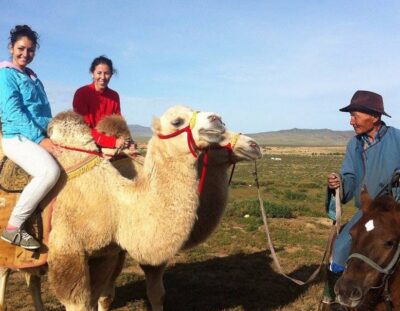
Horse riding is included, though the itinerary does not say where it takes place or how long it lasts. Ask about the riding session, especially if it is an important reason for choosing this tour.
Who should book this trip
I would choose this route if you want a broad first look at the Gobi and prefer a planned overland journey to arranging vehicles, meals, permits, and camps yourself.
It suits you best if you:
- Can handle long days in a 4WD
- Enjoy remote scenery more than polished facilities
- Want ger accommodation and local food included
- Like walking and are ready to climb sand dunes
- Want a small group capped at 12 people
- Prefer a set route through the Gobi’s major sights
I would think twice if you need short transfers, hotel rooms, fixed arrival times, or a relaxed schedule. The route covers large distances, and the first day alone takes about 10 hours. Strong physical fitness is required, so this is not a soft sightseeing holiday.
The company has received praise for helpful planning and for making contact with Mongolian nomadic life part of the trip. Jigden was specifically described as patient and accommodating during trip planning. That kind of support can be useful if you are connecting the Gobi trip with overland travel from China or another long route, but confirm who will handle your booking and departure.
Booking details worth checking
Confirmation is provided when you book. The tour has a maximum of 12 people, which is small enough to keep the vehicle group manageable without promising a private trip.
The meeting point is the Ulaanbaatar City Government area, CHD 1 khoroo, Ulaanbaatar 15160. The activity begins at 8:00 a.m. and returns to that meeting point on Day 8.
Free cancellation is available up to 24 hours before the local start time for a full refund. Inside 24 hours, changes and refunds are not accepted. The trip also requires a minimum number of people, so ask what happens to your plans if that minimum is not met.
Should you book the eight-day Gobi tour?
Book it if you want the Gobi in several forms: granite at Baga Gazariin Chuluu, cliffs at Tsagaan Suvarga, mountains at Yoliin Am, dunes at Khongoryn Els, and red rock at Bayan-Zag. The inclusion of meals, fuel, a 4WD, a guide and cook, ger nights, park fees, and horse riding makes the $3,100 price easier to justify for a remote eight-day trip.
Do not book it expecting comfort or quick transfers. You will spend many hours on the road, walk on demanding sand, and sleep outside Ulaanbaatar in ger accommodation with facilities that are not fully described.
For an active visitor who wants a structured route and a direct connection to Mongolian culture, this is a strong choice. Before paying, confirm the guide’s name, ger facilities, horse-riding details, dietary options, and the expected return time to Ulaanbaatar. Those answers will tell you if the practical side matches the remarkable scenery.
FAQ
Where does the Gobi Desert tour begin?
It begins at the Ulaanbaatar City Government area, CHD 1 khoroo, Ulaanbaatar 15160, Mongolia.
What time does the tour start?
The tour starts at 8:00 a.m.
Where does the tour end?
The activity ends back at the starting meeting point in Ulaanbaatar.
How long is the tour?
The tour lasts approximately eight days.
What is included in the price?
The price includes a driver, 4WD vehicle, fuel, an English-speaking guide and cook, horse riding, national park entrance fees, accommodation listed in the route, 1.5 liters of drinking water per person per day, and meals.
Is accommodation in Ulaanbaatar included?
No. Accommodation in Ulaanbaatar is not included.
How many people can join the tour?
The group can have a maximum of 12 people.
Can I cancel for a full refund?
Yes. You can cancel at least 24 hours before the local start time for a full refund. Cancellations or changes made within 24 hours are not accepted and are not refunded.
Just added around Ulaanbaatar
- 8 Day Great Gobi and Central Mongolia★ 5.0 · 3 reviews
- Terelj National Park & Chinggis Khan Statue Day Tour★ 5.0 · 3 reviews
- 2 Days Tour: Terelj National Park And Chinggis Statue★ 5.0 · 3 reviews
- Horseback Riding Tour to Turtle Rock & Aryabal★ 5.0 · 3 reviews
- Terelj and World energy center Gobi overnight train tour★ 5.0 · 3 reviews
- A Day Aglag Buteel Temple★ 4.5 · 3 reviews
- Nomad Family Home Stay in Arkhangai Province★ 5.0 · 3 reviews
- Essence of Mongolia 5 Days★ 5.0 · 3 reviews
Gobi Desert Trips, compared.
Discover / 8 day Great Gobi and Central Mongolia
Read our review →
Visit Great Gobi attractions in 3 day /Full adventure
Read our review →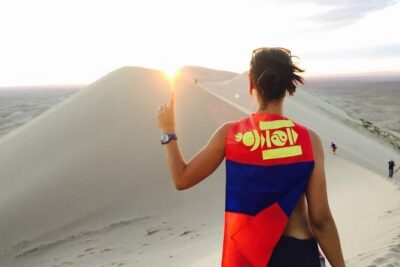
2D,1N Gobi desert and Old city Kharkhorum stay with Nomadic family
Read our review →
6 Days Gobi Desert Tour with complimentary airport pickup
Read our review →Browse the lists this tour appears in